
Exploring the realm of educating teenagers about money management, this guide offers valuable insights and practical tips to help young individuals navigate the world of finances with confidence. From understanding basic concepts to setting financial goals, this guide covers it all in an engaging and informative manner.
As we delve deeper into the importance of financial education for teenagers, we uncover essential strategies for instilling good money habits and fostering a healthy relationship with money.
Importance of Teaching Teenagers About Money Management
Teaching teenagers about money management is crucial for their future financial well-being. By instilling good money habits early on, we can help them avoid common pitfalls and make informed financial decisions throughout their lives.
Negative Consequences of Not Teaching Teenagers About Financial Responsibility
- Accumulating debt: Without proper guidance, teenagers may overspend and accumulate debt that can be difficult to pay off in the future.
- Lack of savings: Teens who are not taught about saving may struggle to build an emergency fund or save for long-term goals.
- Impulse buying: The absence of financial education can lead to impulsive spending habits, which can impact their financial stability in the long run.
Long-Term Benefits of Instilling Good Money Habits Early On
- Financial independence: Teens who are knowledgeable about money management are more likely to achieve financial independence and security in the future.
- Smart investment decisions: Early exposure to financial concepts can help teenagers make informed investment decisions and grow their wealth over time.
- Responsible financial behavior: By learning about budgeting, saving, and investing early on, teenagers can develop responsible financial behavior that will benefit them throughout their lives.
Basic Concepts to Cover
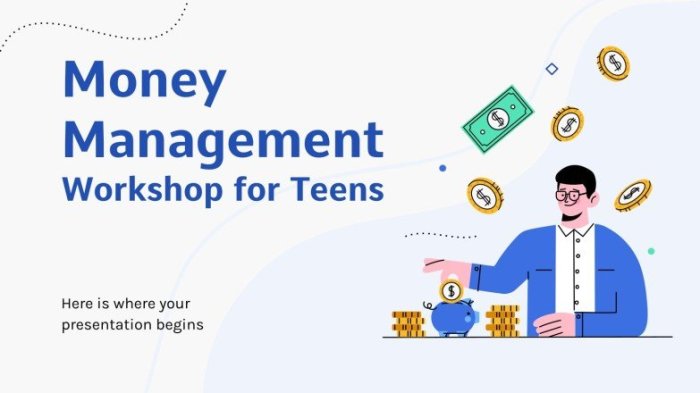
Teaching teenagers about money management involves introducing them to essential financial concepts that will help them make informed decisions in the future. Understanding the basics of needs versus wants, budgeting, and saving money is crucial for their financial well-being.
Needs vs. Wants
- Needs are essential items required for survival, such as food, shelter, and clothing.
- Wants are things that are desirable but not necessary for basic living, like the latest gadgets or designer clothes.
- It's important for teenagers to differentiate between needs and wants to prioritize their spending and make responsible financial choices.
Budgeting
- Introducing the concept of budgeting helps teenagers understand the importance of planning and tracking their expenses.
- Teach them how to create a budget by listing their income and expenses, including fixed costs like rent and variable expenses like entertainment.
- Encourage them to allocate a portion of their income towards savings and emergency funds to build financial security.
-
"A budget is a financial roadmap that guides spending and helps achieve financial goals."
Saving Money
- Emphasize the value of saving money for future goals, such as college, a car, or a rainy day fund.
- Show teenagers how saving regularly, even small amounts, can add up over time through the power of compound interest.
- Encourage them to set specific savings goals and track their progress to stay motivated and develop good saving habits.
Practical Activities to Teach Money Management
Hands-on activities are a great way to help teenagers grasp the concept of money management. By engaging in interactive exercises, they can learn valuable skills that will benefit them in the long run.
Scenario-based Simulations
Designing scenarios or simulations that mimic real-life financial situations can be an effective way to teach teenagers about money management. For example, create a scenario where they have to budget for a week's worth of groceries or plan for unexpected expenses like car repairs.
This hands-on approach allows them to experience the consequences of their financial decisions in a safe environment.
Role-Playing Exercises
Organizing role-playing exercises can also be a fun and educational way for teenagers to practice making financial decisions. Assign different roles such as a parent, a student, or a business owner, and have them navigate through various financial scenarios. This can help them understand the importance of budgeting, saving, and making wise financial choices.
Tools and Resources for Teenagers
When it comes to teaching teenagers about money management, having access to the right tools and resources can make a significant difference in their financial education. Here are some useful resources that can help teenagers learn how to manage their money effectively:
Budgeting Apps and Online Financial Platforms
One of the most convenient ways for teenagers to track their expenses and savings is by using budgeting apps or online financial platforms. These tools allow them to set financial goals, monitor their spending, and understand where their money is going.
Some popular budgeting apps for teenagers include Mint, YNAB (You Need a Budget), and PocketGuard.
Recommended Books and Websites for Financial Education
- Book Recommendation: "The Teen's Guide to Personal Finance: Basic Concepts in Personal Finance that Every Teen Should Know" by Joshua Holmberg. This book covers essential financial concepts in a simple and engaging way, making it easy for teenagers to grasp the fundamentals of money management.
- Website Recommendation: Investopedia's "Financial Education for Teens" section provides a wealth of articles, tutorials, and resources specifically designed to educate teenagers about various financial topics such as budgeting, saving, investing, and more.
Setting Financial Goals
Setting financial goals is crucial for teenagers to develop responsible money management habits and work towards achieving their financial aspirations. By setting specific goals, teenagers can learn the value of saving, budgeting, and making informed financial decisions. Here's how teenagers can effectively set financial goals:
Examples of Financial Goals
- Short-term financial goals: Saving up for a new smartphone, buying concert tickets, or setting aside money for a weekend getaway.
- Long-term financial goals: Saving for college tuition, buying a car, or investing in a retirement fund.
Role of Goal-Setting
Setting financial goals helps teenagers prioritize their spending, track their progress, and stay motivated to save money. It instills discipline, patience, and a sense of accomplishment when goals are achieved. By establishing clear objectives, teenagers can develop good money management habits that will benefit them in the long run.
Last Recap

In conclusion, teaching teenagers about money management is not just about numbers; it's about empowering them to make informed decisions and secure their financial future. By providing the necessary knowledge and tools, we can equip the next generation with the skills they need to thrive in a financially complex world.
FAQ Insights
Why is it important to teach teenagers about money management?
Teaching teenagers about money management is crucial as it helps them develop essential financial skills that will benefit them throughout their lives, enabling them to make sound financial decisions and avoid common pitfalls.
What are some practical activities to teach money management to teenagers?
Engaging teenagers in interactive activities, designing real-life financial scenarios, and organizing role-playing exercises are effective ways to help them grasp money management concepts and apply them in practical situations.
Are there any recommended resources for teenagers to learn about money management?
There are various useful tools and resources available, such as budgeting apps, online financial platforms, and educational books or websites specifically designed to provide financial education tailored to teenagers.
How can teenagers effectively set financial goals?
Teenagers can effectively set financial goals by understanding the importance of goal-setting, defining clear short-term and long-term objectives, and regularly monitoring their progress towards achieving these goals.

